Dacia Duster
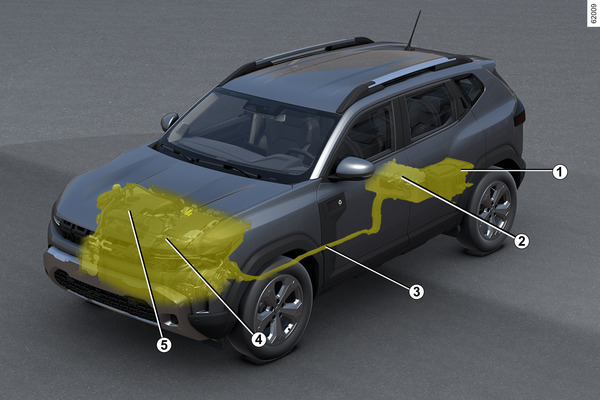
- 1
- "12 Volt" battery
- 2
- "230 volt" traction battery
- 3
- Orange electrical power cables
- 4
- Electric motor
- 5
- Combustion engine
The Hybrid vehicle system uses an electric motor to improve the performance of the combustion engine (acceleration, starting, etc.).
The vehicle has more acceleration torque available while consuming less fuel.
The vehicle may also move in all-electric operating mode without any assistance from the combustion engine. The vehicle uses energy stored in the "230 V" traction battery.
Batteries
The Hybrid vehicle is equipped with two types of battery:
- a "230 V" traction battery;
- a "12 V" battery.
"230 V" traction battery
This battery, located underneath the rear floor, stores the energy required for the electric motor to operate correctly.
As with any battery, it discharges when it is used. The traction battery is charged:
- during the vehicle deceleration phases;
- when the combustion engine starts automatically in order to act as a generator.
Your vehicle range in electric operating mode depends on the charge level of the traction battery, and also on your driving style and the components consuming energy (air conditioning, heating system etc.).
In the event of traction battery discharge, the combustion engine alone moves the vehicle until the traction battery is sufficiently recharged.
If your vehicle is parked for a long time, start the engine at regular intervals (about once a month) and check that the
 warning light is displayed in blue on the instrument panel. If this happens, the battery needs to be recharged: leave the engine on until the warning light is displayed in blue Displays and indicators.
Failure to do so may result in damage to the traction battery and make it impossible to start the vehicle.
"12 V" battery
The "12 V" battery, located in the luggage compartment, supplies the energy required to open/close the vehicle and to operate the equipment.
Note: the "12 V" battery does not help to start the combustion engine. This is provided by the Hybrid system.
warning
The Hybrid vehicle electric system uses approximately 230 V DC (direct current).
This system can get hot during and after switching off the ignition. Respect warning messages given on the labels in the vehicle.
All operations on or modifications to the "230 V" electrical system (components, cables, connectors, traction battery) are strictly prohibited due to the risks they present to your safety. Call an approved dealer.
The risk of serious burns or electric shocks can lead to death.
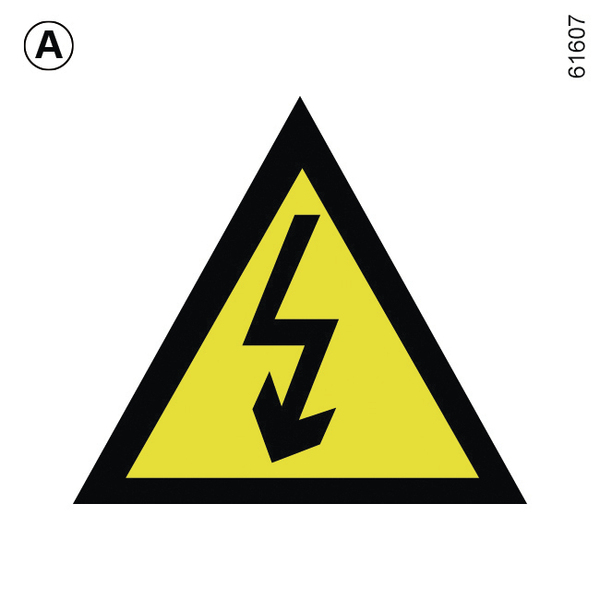
The A symbol identifies the electrical elements in your vehicle which may present safety risks.
"230 V" electrical circuit
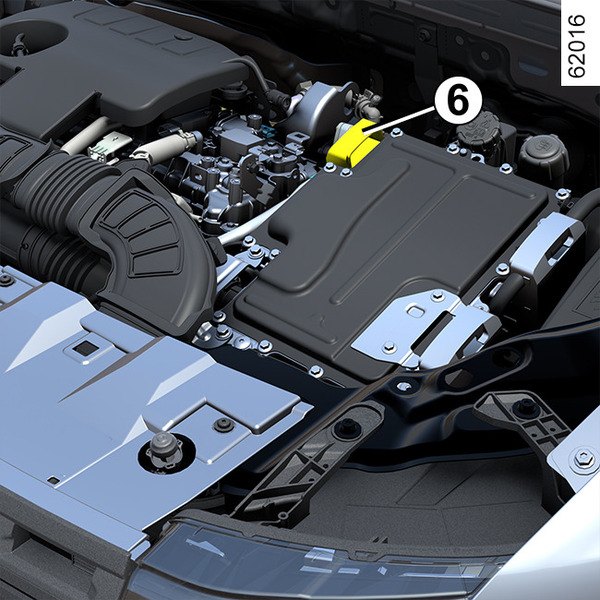
The "230 V" electrical circuit can be recognised by orange cables 6 and parts bearing the
 symbol.
Noise
The Hybrid vehicles are particularly quiet in electric operating mode. You will not yet necessarily be used to it, and neither will other road users. It is difficult for them to hear your vehicle when it is moving.
To warn people of your vehicle presence, your vehicle is fitted with a pedestrian horn. In electric operating mode, the system is activated automatically. The sound is emitted when the vehicle speed is between approximately 1 and 19 mph (1 and 30 km/h).
As the electric motor is silent, you will hear noises that may seem unusual (aerodynamic noises, tyres, etc.) as well as noises due to the operation of the Hybrid system (e.g. cooling of the traction battery).
Pedestrian horn
The pedestrian horn enables you to warn others of your presence – especially pedestrians and cyclists.
When the engine is started, the pedestrian horn is activated automatically. The sound is emitted when the vehicle speed is between approximately 1 and 19 mph (1 and 30 km/h).
In the event of a fault with the pedestrian horn, the "Failure Outside sound" message is displayed on the instrument panel. Consult an approved Dealer.
warning
Your Hybrid vehicle is very quiet. When getting out of the vehicle, always check that the gear selector is in P position, apply the parking brake and switch off the ignition.
RISK OF SERIOUS INJURY.