Emergency call

<?xml version="1.0" standalone="yes"?>

Introduction

If the vehicle is equipped, the emergency call function can be used to call the emergency services (without charge) automatically or manually in the event of an accident or illness, reducing the time it takes for the emergency services to arrive.

Note: emergency calling is available:

Chapter

Parking distance control

<?xml version="1.0" standalone="yes"?>

Introduction

12003_P1310_002_1_image.jpeg

Ultrasonic sensors, indicated by arrows 1, are fitted in the bumpers to detect obstacles near the vehicle.

Chapter

Multi-view camera

<?xml version="1.0" standalone="yes"?>

If fitted on the vehicle, the four cameras 1, 2 and 3 located in the front bumper, door mirrors and tailgate help you with difficult manoeuvres.

Chapter

Stop and Go adaptive cruise control

<?xml version="1.0" standalone="yes"?>

Based on information from a camera, the Stop and Go adaptive cruise control function gives you the option of maintaining a selected speed, known as the cruising speed, while keeping a safe distance from the vehicle in front in the same lane.

Chapter

Cruise control

<?xml version="1.0" standalone="yes"?>

The cruise control function controls the engine to help you to maintain a driving speed that you have chosen, known as the cruising speed.

The cruise control function can be activated from 12 mph (20 km/h) or, depending on the vehicle, from 19 mph (30 km/h) to 112 mph (180 km/h).

warning

The cruise control function is in no way linked to the braking system.

Chapter

Speed limiter

<?xml version="1.0" standalone="yes"?>

The speed limiter function controls the engine to help you not to exceed a driving speed that you have chosen, known as the limit speed.

The speed limiter function can be activated from 0 mph to 112 mph (180 km/h).

Controls

12038_P1310_002_1_image.jpeg

Chapter

Detection of road signs

<?xml version="1.0" standalone="yes"?>

The system displays speed limits on the instrument panel according to road signs detected on the side of the road.

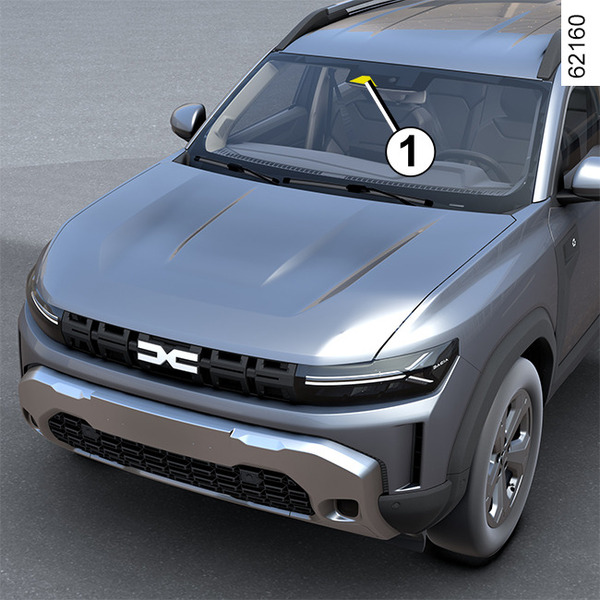
It mainly uses information taken from the camera 1 attached to the windscreen behind the rear view mirror.

Chapter

Driver fatigue warning

<?xml version="1.0" standalone="yes"?>

Introduction

warning

This function is an additional driving aid in case of risk of fatigue. The function does not operate on the vehicle. The function cannot, under any circumstances, replace the driver's responsibility during driving.

The driver must always adapt their driving according to their alertness, regardless of the system's indications.

Chapter